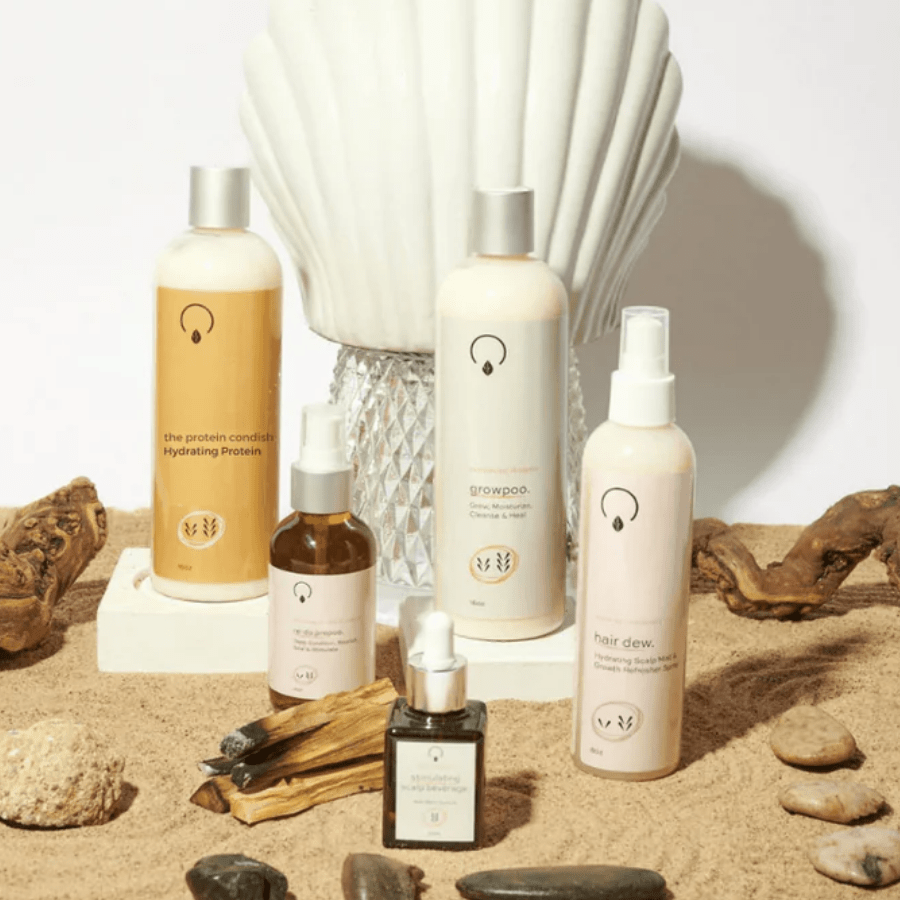
Your scalp is skin — and like the skin on your face, it needs consistent care to stay healthy. An unhealthy scalp creates an environment where hair follicles are compromised, leading to slower growth, increased shedding, and chronic issues like dandruff, dryness, and irritation. This guide walks you through the key components of a complete scalp care routine and explains how each step supports long-term hair health.
The 4 Pillars of Scalp Health
- Cleanliness — A clean scalp is free from product buildup, excess sebum, dead skin cells, and environmental pollutants that can clog follicles and create an environment for bacterial or fungal overgrowth. Regular shampooing with a gentle, sulfate-free formula is the foundation.
- Balance — The scalp has a natural pH of around 4.5–5.5 (slightly acidic), which supports the scalp's microbiome and keeps the cuticle sealed. Harsh shampoos, alkaline products, and over-washing disrupt this balance. Our formulas are pH-balanced to support the scalp's natural ecosystem.
- Stimulation — Blood flow to the scalp delivers oxygen and nutrients to the follicle. Regular scalp massage (3–5 minutes, 2–3 times per week) combined with a stimulating scalp oil significantly increases follicle activity and can extend the anagen (growth) phase.
- Nourishment — The follicle needs specific nutrients to produce strong, healthy hair — including biotin, zinc, iron, and essential fatty acids. Topical scalp treatments deliver these nutrients directly to the follicle, while internal supplementation supports growth from within.
Common Scalp Issues and How to Address Them
Product Buildup
Buildup from styling products, conditioners, hard water minerals, and excess sebum accumulates on the scalp and hair shaft over time, blocking moisture absorption and potentially clogging follicles. Signs include dull, limp hair, scalp itchiness, and products that seem to stop working. Solution: clarify regularly with GrowPoo and reduce heavy product use directly on the scalp.
Dry Scalp
A dry scalp lacks moisture and oil, leading to tightness, itchiness, and small white flakes. It's often caused by over-washing, harsh shampoos, cold/dry weather, or dehydration. Solution: switch to a gentle moisturizing shampoo, reduce wash frequency, and apply a lightweight scalp oil between washes to restore the lipid barrier.
Dandruff
Dandruff is caused by an overgrowth of Malassezia yeast on an oily scalp, triggering inflammation and accelerated skin cell shedding. Signs include large, oily or yellowish flakes, scalp redness, and itching. Solution: use a shampoo with antifungal botanicals (tea tree oil, black seed oil, apple cider vinegar) and avoid heavy product application directly on the scalp.
Scalp Inflammation & Irritation
Inflammation is one of the most underrecognized causes of hair loss and slow growth. Chronic scalp inflammation — from harsh ingredients, tight hairstyles, or underlying conditions — can damage follicles over time. Solution: eliminate harsh chemicals (sulfates, synthetic fragrances, parabens) from your routine, avoid styles that create tension at the hairline, and use anti-inflammatory scalp treatments with black seed oil and aloe vera.
The OrganiGrowHairCo Scalp Care Routine
- Step 1 — Clarify: Use GrowPoo Clarifying Shampoo to remove buildup and reset the scalp. Frequency depends on porosity — low porosity hair benefits from clarifying every 1–2 weeks; high and medium porosity hair can clarify monthly.
- Step 2 — Treat: Apply the Stimulating Scalp Beverage directly to the scalp and massage for 3–5 minutes. Use 2–3 times per week for best results.
- Step 3 — Nourish from Within: Pair your topical routine with OrganiGrowHairCo Hair Growth Vitamins to support follicle health from the inside out.
- Step 4 — Protect: Avoid tight hairstyles, heat directly on the scalp, and harsh chemical treatments that can damage follicles and cause traction alopecia over time.
Frequently Asked Questions About Scalp Care
How do I know if my scalp is healthy?
A healthy scalp is free from flaking, itching, redness, and tenderness. It feels comfortable — not tight, not oily, not irritated. Hair sheds at a normal rate (50–100 strands per day is typical) and new growth is visible at the hairline and crown. If you're experiencing persistent itching, flaking, pain, or excessive shedding, it's worth evaluating your product ingredients and wash routine — and consulting a dermatologist if symptoms persist.
Can scalp massage really help hair grow?
Yes — and there's research to support it. A 2016 study published in ePlasty found that standardized scalp massage increased hair thickness in participants after 24 weeks. The mechanism is increased blood flow to the follicle, which delivers more oxygen and nutrients to support the anagen (growth) phase. Combining scalp massage with a stimulating oil like our Scalp Beverage amplifies these effects.
How long does it take to see improvement in scalp health?
Most people notice improvement in scalp comfort (reduced itching, less flaking) within 2–4 weeks of switching to a gentle, non-toxic routine. Visible improvements in hair density and growth typically take 8–12 weeks of consistent care, as the hair growth cycle operates on a monthly timeline.
Organic • Vegan • Cruelty-Free • SLS-Free • Paraben-Free • No Synthetic Fragrance • Made in the USA