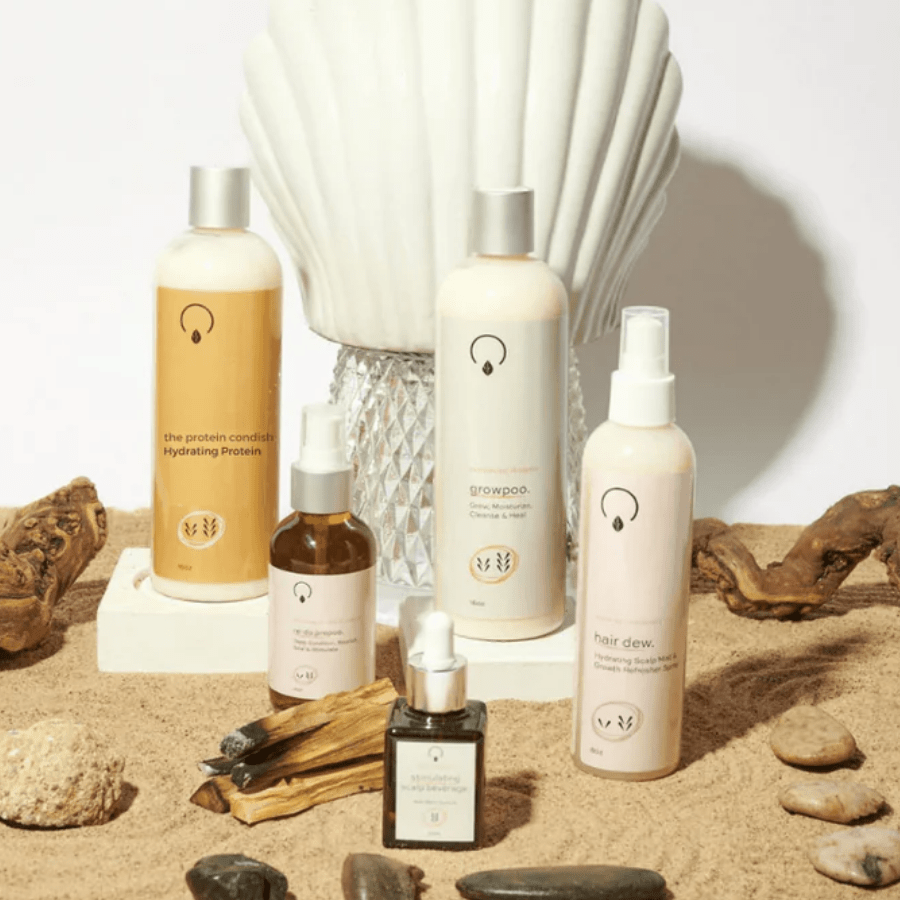
High Porosity Hair Products

High Porosity Hair Products — Seal, Strengthen & Lock In Moisture

High porosity hair absorbs moisture quickly but struggles to hold it — leaving strands feeling dry, frizzy, and prone to breakage. Our high porosity formulas are designed to seal the cuticle, lock in moisture, and rebuild strength using rich, nourishing plant-based ingredients that penetrate fast and stay put.

Cuticle-Sealing FormulasFrizz ControlProtein-BalancedVegan & Non-ToxicMade in the USA

Why High Porosity Hair Loses Moisture So Fast

High porosity hair has gaps and holes in the cuticle layer — often caused by heat damage, chemical processing, or genetics. This means moisture enters easily but escapes just as fast, leaving hair chronically dry, tangled, and prone to breakage.

The key to managing high porosity hair is sealing: using heavier creams, butters, and oils after moisturizing to close the cuticle and trap hydration inside. Protein treatments also help fill in the gaps in the cuticle, temporarily restoring strength and elasticity. OrganiGrowHairCo's high porosity line is built around this seal-and-strengthen approach.

Cuticle Sealing

Rich creams and oils that coat the strand and lock moisture inside the open cuticle.

Frizz Reduction

Smooth the cuticle and reduce humidity-driven frizz with moisture-locking plant butters.

Protein Balance

Targeted protein support to fill cuticle gaps and restore elasticity without overloading.

Breakage Prevention

Strengthen fragile strands and reduce snapping with nourishing, bond-supporting formulas.

Deep Moisture

Penetrating conditioners and leave-ins that deliver lasting hydration to thirsty strands.

Scalp Nourishment

Support healthy follicle function with scalp-first formulas that encourage strong new growth.

High Porosity Hair — Frequently Asked Questions

How do I know if I have high porosity hair?

Place a clean strand of hair in a glass of water. If it sinks quickly, you likely have high porosity hair. Other signs include hair that dries very fast, absorbs products immediately, tangles easily, and feels dry or rough even after conditioning.

What causes high porosity hair?

High porosity can be genetic, but it is most commonly caused by heat styling, chemical treatments (relaxers, color, bleach), and environmental damage. These processes lift and damage the cuticle layer, creating gaps that allow moisture to escape rapidly.

What ingredients are best for high porosity hair?

High porosity hair benefits from heavier, sealing ingredients like castor oil, shea butter, and avocado oil that coat the strand and lock in moisture. Protein-rich ingredients like hydrolyzed silk or rice protein help fill cuticle gaps and restore strength. Avoid overly light products that won't provide enough sealing.

Does high porosity hair need protein?

Yes — in moderation. High porosity hair often benefits from protein treatments to temporarily fill in the damaged cuticle and restore elasticity. However, too much protein can cause brittleness. Balance protein treatments with deep moisture conditioning to keep hair strong and flexible.

How do I reduce frizz in high porosity hair?

Frizz in high porosity hair is caused by the open cuticle absorbing humidity from the air. The solution is to seal the cuticle after moisturizing using a heavier cream or oil, apply products to soaking wet hair to lock in water, and finish with a cold water rinse to help close the cuticle.

Organic • Vegan • Cruelty-Free • SLS-Free • Paraben-Free • No Synthetic Fragrance • Made in the USA

The Complete Guide to High Porosity Hair Care

High porosity hair is one of the most misunderstood hair types — and one of the most common. If your hair soaks up water instantly, dries quickly, feels dry again within hours of moisturizing, or is prone to frizz and tangles, you likely have high porosity hair. The good news: with the right products and routine, high porosity hair can be deeply moisturized, strong, and defined. This guide breaks down exactly what's happening at the cuticle level and how to build a routine that actually works.

What Is High Porosity Hair?

Hair porosity refers to how well your hair absorbs and retains moisture. High porosity hair has gaps, holes, or raised cuticles that allow moisture to enter very quickly — but also allow it to escape just as fast. This can be caused by genetics, but is also commonly the result of chemical processing (color, relaxers, perms), heat damage, or mechanical damage from aggressive brushing and manipulation.

Signs you have high porosity hair include: hair gets wet almost instantly, hair dries very quickly after washing, hair feels dry or rough even after conditioning, frizz is a constant battle, and hair is prone to tangles and breakage.

Why High Porosity Hair Loses Moisture So Fast

The cuticle layer of high porosity hair is lifted or damaged, creating gaps that allow water molecules to pass through freely in both directions. When you apply water or conditioner, it absorbs quickly — but without a proper sealing step, it evaporates just as fast. This is why high porosity hair often feels moisturized immediately after washing but dry again within hours. The solution is a layered approach: hydrate deeply, then seal with heavier oils and butters that slow moisture loss.

The OrganiGrowHairCo High Porosity Routine

  • Step 1 — Pre-Poo: Apply a rich pre-shampoo treatment to protect strands before washing. High porosity hair is especially vulnerable to hygral fatigue (swelling and contracting from water exposure), so pre-pooing with an oil or treatment creates a protective barrier.
  • Step 2 — Cleanse Gently: Use a moisturizing, sulfate-free shampoo that cleanses without stripping. Avoid clarifying shampoos more than once a month — high porosity hair doesn't need aggressive clarifying as often as low porosity hair.
  • Step 3 — Deep Condition with Protein Balance: High porosity hair benefits from protein to fill gaps in the cuticle and rebuild strength. Use a deep conditioner with a balanced protein-moisture ratio. Avoid protein overload — too much protein causes brittleness.
  • Step 4 — Leave-In Conditioner: Apply a rich leave-in while hair is still soaking wet to lock in as much moisture as possible before the cuticle begins to close.
  • Step 5 — Seal with Oil or Butter: This is the most critical step for high porosity hair. Apply a heavier oil (castor, avocado, or black seed oil) or a butter-based product over your leave-in to seal the cuticle and slow moisture evaporation.
  • Step 6 — Scalp Treatment: Massage the Stimulating Scalp Beverage into your scalp to stimulate circulation and support follicle health. A healthy scalp is the foundation of healthy hair growth regardless of porosity.

Protein vs. Moisture: Getting the Balance Right for High Porosity Hair

High porosity hair needs both protein and moisture — but in the right balance. Protein fills the gaps in the cuticle, temporarily patching the damage and reducing porosity. Moisture keeps the hair flexible and prevents brittleness. Too much protein without moisture causes stiff, brittle hair that breaks easily. Too much moisture without protein causes limp, mushy hair with no elasticity. The goal is to alternate: use a protein-rich treatment one week, a moisture-focused treatment the next, and pay attention to how your hair responds.

Ingredients That Work Best for High Porosity Hair

  • Castor oil — Heavy, sealing oil that coats the cuticle and locks in moisture. Also supports scalp health and hair growth.
  • Avocado oil — Rich in fatty acids that penetrate the hair shaft and strengthen from within.
  • Black seed oil — Anti-inflammatory, antifungal, and deeply nourishing for both scalp and strands.
  • Shea butter — A rich emollient that seals the cuticle and provides long-lasting moisture retention.
  • Aloe vera — A humectant that draws moisture into the hair shaft and helps balance pH to smooth the cuticle.
  • Hydrolyzed proteins (plant-based) — Temporarily fill cuticle gaps to reduce porosity and improve strength.

Frequently Asked Questions About High Porosity Hair

Can high porosity hair be reversed?

If your high porosity is caused by damage (heat, chemicals, mechanical stress), you cannot fully reverse it — but you can significantly improve the condition of your hair with consistent protein treatments, gentle handling, and sealing products. New growth will have your natural porosity level. If your high porosity is genetic, it's simply your hair's natural state and can be managed beautifully with the right routine.

How often should high porosity hair be deep conditioned?

High porosity hair benefits from deep conditioning every wash day — typically once a week. Because moisture escapes so quickly, consistent deep conditioning is essential to maintain hydration levels. Alternate between protein-rich and moisture-focused deep conditioners based on how your hair feels.

Does high porosity hair need heat to deep condition?

Unlike low porosity hair, high porosity hair does not require heat to open the cuticle — it's already open. In fact, using a cool rinse after deep conditioning can help temporarily close the cuticle and seal in moisture. Apply your deep conditioner, cover with a plastic cap, and let it sit for 20–30 minutes at room temperature for best results.

Is high porosity hair more prone to breakage?

Yes — high porosity hair is more vulnerable to breakage because the cuticle is compromised, making the hair shaft weaker and more susceptible to mechanical damage. Gentle detangling (finger detangle first, then wide-tooth comb on wet, conditioned hair), protective styling, and consistent protein-moisture balance are the most effective ways to reduce breakage.

Organic • Vegan • Cruelty-Free • SLS-Free • Paraben-Free • No Synthetic Fragrance • Made in the USA

  • Follow Us on Instagram

    See the glow-up for yourself.
    @OrganiGrowHairCo

    FOLLOW US
  • Join the Movement

    100K+ customers and counting.
    Real testimonials. Real results. No paid influencers.

    SHOP NOW
  • From Our Blog

    Discover plant-powered tips, real results, and porosity-based guidance to help your hair grow healthier, stronger, and more defined—naturally.

    Learn More